11 min read
Need it handled? Call (847) 979-9776
Flooring in Chicago, IL: Eco Organic Cleaning serves Chicago and the surrounding area. Call (847) 979-9776 for a free estimate.
TL;DR: [Mold can begin colonizing wet carpet within 24–48 hours under typical Chicago indoor conditions.] Your immediate priorities are removing standing water, running dehumidifiers to drop humidity below 50% RH, and assessing whether carpet padding needs replacement. If water came from sewage or outdoor flooding, or if the carpet has been wet longer than 48 hours, professional remediation is almost always the safer choice.
Why Does Wet Carpet Grow Mold So Quickly?
Mold doesn't need much to thrive – just moisture, warmth, and an organic food source. Learn more about how moisture soaks into carpet padding. Carpet fibers and padding provide the perfect meal. The real problem is timing. According to the EPA, [mold can begin colonizing wet materials within 24 to 48 hours], as the EPA's flood cleanup guidance explains. In Chicago's warm, humid summers, when indoor temperatures hover around 75°F and relative humidity climbs to 70% or higher, that window can compress to just 24 hours.
Here's what happens beneath the surface: carpet padding acts like a sponge, absorbing and holding moisture long after the surface fibers feel dry to the touch. [Carpet padding is typically made of foam, rebond (recycled foam), or fiber materials — all of which are highly absorbent and difficult to dry thoroughly.] This hidden reservoir of dampness is exactly where mold colonies establish themselves – out of sight, spreading unchecked. By the time you notice a musty smell or see discoloration, the problem has often already taken root in the padding and subfloor.
The stakes are real. A small mold problem caught early might cost $200–$700 to professionally dry and treat. Left untreated, full mold remediation can run $1,000–$6,000 or more, plus potential health impacts for your family. This is why the first 48 hours after flooding are absolutely critical.
Key Takeaway: Mold can begin colonizing in as little as 24–48 hours under typical indoor conditions (EPA, 2023). Speed matters more than perfection.
What Should You Do in the First 24 Hours After Carpet Flooding? in Chicago
The moment water touches your carpet, the clock starts. Here's the hour-by-hour action plan:
Hours 0–2: Stop the Water and Remove Standing Water
First, locate and stop the water source. If it's a burst pipe, shut off the main water valve. If it's a leak from above, find and contain it. Turn off electricity in the affected area before entering – wet carpet and live circuits are a serious hazard.
Next, extract as much standing water as possible. Use a wet/dry vacuum (also called a shop vac), not a regular household vacuum – moisture will destroy a standard motor. Make slow, deliberate passes across the carpet, emptying the tank frequently. A wet/dry vac removes roughly 80% more moisture per pass than manual blotting with towels. If the flooding is extensive, renting commercial extraction equipment from a local rental center will remove far more water in far less time.
Hours 2–6: Open Windows and Start Airflow
Here's where Chicago's climate becomes a factor: our summer humidity averages 70–75% RH. Opening windows during humid months can actually increase indoor humidity rather than decrease it. Instead, focus on internal air circulation. Run ceiling fans on high. Position floor fans to push air directly across the wet carpet surface – the goal is constant evaporation, not stagnant air.
If you have a dehumidifier, turn it on now. If not, rent one immediately. A unit rated for 30 pints per day can reduce a 200 sq ft room from 80% RH to below 50% RH in approximately 6–10 hours under typical conditions. [The EPA recommends drying water-damaged areas and items within 24 to 48 hours to help prevent mold growth, with indoor humidity targets of 30 to 60 percent.]
Hours 6–24: Monitor Humidity and Lift Carpet Edges
Pull back the carpet edges to expose the padding and subfloor underneath. This allows air to circulate beneath the surface, where moisture is trapped. If the padding feels saturated (heavy, cold, or smells musty), it's likely beyond saving – more on that below.
Keep the dehumidifier running continuously. Empty the collection tank regularly so it maintains efficiency. Check humidity levels with an inexpensive hygrometer (available at any hardware store for $10–$20). Your target is below 50% RH. If humidity is still above 60% after 12 hours, you may need a second dehumidifier or larger-capacity unit.
Which Anti-Mold Treatments Actually Work on Wet Carpet?
Once the carpet is nearly dry to the touch, antimicrobial treatment becomes your second line of defense. Learn more about How to Remove Old Set-In Pet Stains From Carpet. Learn more about eco-friendly carpet cleaning alternatives. Not all treatments are created equal – and some common advice is actually counterproductive.
What NOT to Use: Bleach
Bleach is ineffective on porous materials like carpet. It cannot penetrate carpet fibers to reach the root structure of mold colonies, according to EPA guidance on mold remediation. Bleach kills only surface mold while leaving the subsurface structure intact, and it leaves a residue that actually attracts moisture back into the fibers. Skip it entirely.
What Actually Works:
| Treatment | Application | Effectiveness | Safety | Cost |
|---|---|---|---|---|
| White Vinegar (5% acetic acid) | Spray undiluted, let sit 10 min, blot | Kills common mold species | Non-toxic; safe for kids and pets | $3–$5 per bottle |
| Baking Soda | Sprinkle on nearly-dry carpet, vacuum after 30 min | Inhibits mold; deodorizes | Non-toxic; safe for all | $2–$4 per box |
| Hydrogen Peroxide (3%) | Spray, let sit 5–10 min, blot | Effective antimicrobial; safe on carpet | Slightly stronger than vinegar; test first | $4–$8 per bottle |
| Commercial Antimicrobial Spray | Follow label directions | Varies by product | Check label for pet/child safety | $15–$40 per bottle |
For homes with children or pets in the Chicago area, white vinegar and baking soda are the safest bets. Spray undiluted white vinegar (5% acetic acid) directly onto damp carpet, let it sit for 10 minutes, then blot thoroughly – don't rub, which can push moisture deeper. Once the carpet is nearly dry, sprinkle baking soda across the surface, wait 30 minutes, and vacuum thoroughly. Both are non-toxic and won't leave harmful residue.
Hydrogen peroxide at 3% concentration is a stronger option and has been used in healthcare settings for disinfection. It's safe on carpet but may slightly lighten some dyed fibers – test on an inconspicuous area first.
Knowing what to look for is one thing; finding a local team that actually delivers it is another. Eco Organic Cleaning is one serving Chicago, North & NW Chicago Land and South & SW Chicago Land — clear about what they do, upfront on pricing, and easy to reach before you commit to anything.
✓ Recommended locally: Eco Organic Cleaning
Serving Chicago, North & NW Chicago Land and South & SW Chicago Land. Call (847) 979-9776 or get in touch »
How Do You Know If the Carpet Padding Needs to Be Replaced?
This is the hidden failure point most homeowners miss. Learn more about How to Know If Carpet Cleaning Products Are Safe for Babies. Learn more about carpet cleaning vs. full replacement. Carpet padding retains moisture 10–20 times longer than surface fibers, and that trapped dampness is where mold thrives beneath the surface.
Visual and Touch Tests
Lift a corner of the carpet and inspect the padding underneath. Look for discoloration, dark spots, or visible mold growth. Touch the padding: it should feel dry within 48 hours of active drying. If it still feels damp or cold after 72 hours, replacement is almost certainly necessary.
Water Category Matters
The IICRC S500 Standard classifies floodwater into three categories:
- Category 1 (Clean): Water from a burst pipe or clean source
- Category 2 (Gray Water): Water from appliances, dishwashers, or minor sewage
- Category 3 (Black Water): Sewage, outdoor floodwater, or contaminated sources
Chicago's combined sewer system means basement flooding from heavy rain frequently involves Category 2–3 water, not clean Category 1. Padding that has been submerged in Category 2 or 3 water should always be replaced, regardless of how dry it appears. The health risk isn't worth the savings.
Cost Reality
The cost of new padding ($0.50–$1.50 per square foot) is far less than the cost of mold remediation. For a standard 12×14 bedroom (168 sq ft), that's roughly $84–$252 in materials. Professional installation adds another $1.00–$2.50 per sq ft. Compare that to the $1,000–$6,000+ cost of full mold remediation, and the math becomes clear: replacing padding now prevents a much larger problem later.
Key Takeaway: Saving $100 in padding replacement now can cost $1,000+ in mold remediation later.
When Should You Call a Professional Instead of DIY?
Not every wet carpet situation is a DIY project. Learn more about professional carpet drying and cleaning services. Here's the decision checklist:
Call a Professional Immediately If:
- Water type is Category 2 or 3 (sewage, gray water, or outdoor floodwater). Chicago basement flooding from heavy rain often falls into this category due to our combined sewer system.
- Affected area exceeds 10 sq ft. Larger areas require commercial-grade extraction and drying equipment.
- Water has been present for more than 48 hours before you discovered it. Mold colonization is likely already underway.
- Visible mold is already present. Black, green, or white spots indicate active growth.
- You detect a musty smell after drying attempts. This signals mold growth in hidden areas.
- Carpet padding is saturated and shows no signs of drying after 72 hours of active dehumidification.
Why Professional Drying Matters
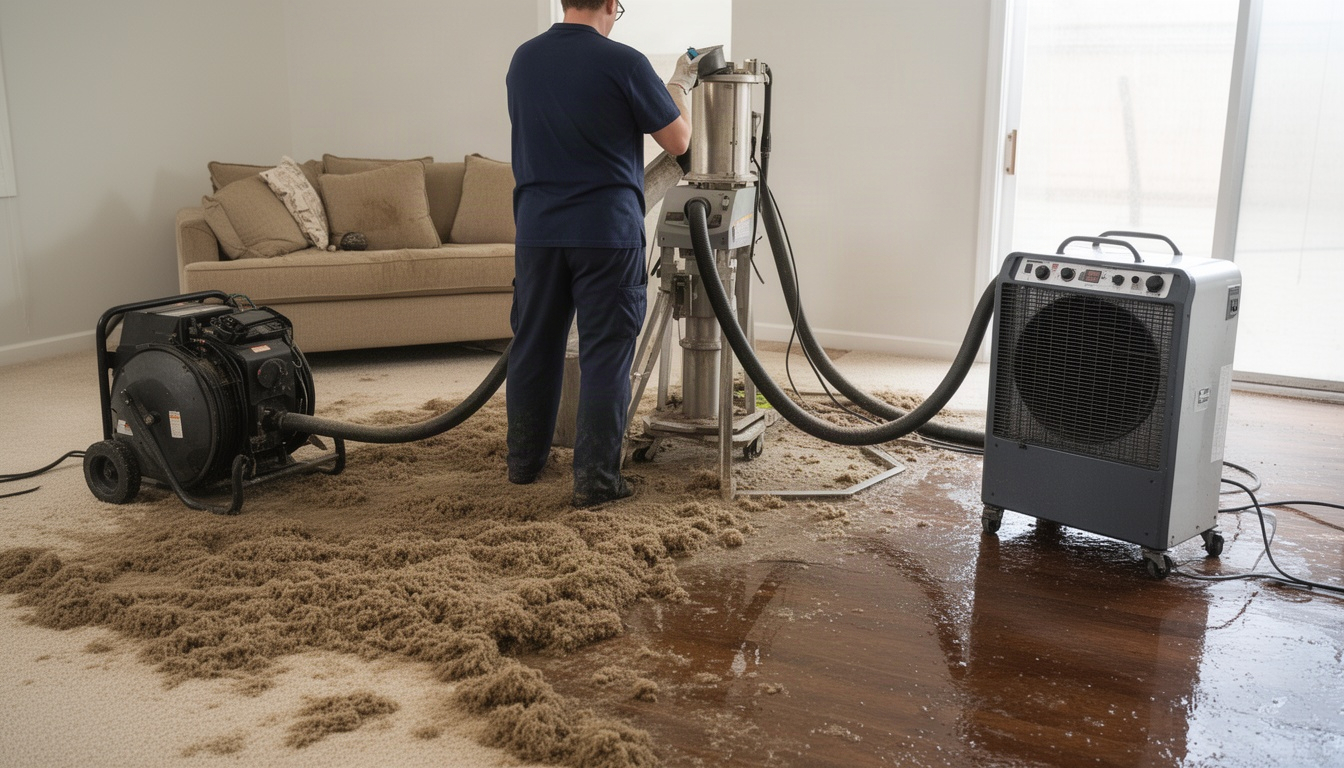
Professional water damage restoration companies use commercial air movers that deliver 1,500–3,000 CFM (cubic feet per minute) of directed airflow – compared to a household fan's 250–400 CFM. This dramatically reduces drying time from 3–4 days to approximately 24 hours. They also use moisture meters to verify that subfloors and padding have reached safe moisture levels before declaring the job complete. [Typically 3–5 days for carpet to reach acceptable moisture levels with professional equipment running continuously.]
Professional carpet drying in the Chicago area typically costs $200–$700 for a standard room, depending on severity and equipment required. That's a reasonable investment compared to the cost of mold remediation or full carpet replacement.
Local Expertise Matters
Here in Chicago, we understand the specific challenges of basement flooding and the risks posed by our aging combined sewer infrastructure. Eco Organic Cleaning specializes in water damage restoration and carpet drying using eco-friendly methods that protect your family's health while addressing the moisture problem. Their team can assess water type, determine whether padding needs replacement, and execute professional drying protocols that meet IICRC S500 standards. If you're uncertain whether your situation requires professional help, a consultation can clarify your options and costs.
Recommended Flooring: Eco Organic Cleaning
If you'd rather skip the search, Eco Organic Cleaning serves Chicago, North & NW Chicago Land and South & SW Chicago Land and handles this end to end — with clear pricing and a straight answer on timing before you commit.
Eco Organic Cleaning
Serving Chicago, North & NW Chicago Land and South & SW Chicago Land
Frequently Asked Questions About Mold and Wet Carpet
How long does wet carpet take to grow mold? For more details, see how to verify a carpet cleaner uses non-toxic products. Learn more about How to Permanently Remove Pet Odors From Carpet (No Toxic Chemicals). For more details, see eco-friendly carpet cleaning options in the Chicago area.
Direct Answer: [Mold can begin growing within 24 to 48 hours after water damage if wet building materials are not dried quickly.] In Chicago's warm, humid summers, visible mold can appear in as few as 24 hours.
The timeline depends on temperature and humidity. Higher temperatures and humidity accelerate growth. If your carpet was saturated at 8 a.m. Monday, mold colonization risk begins by 8 a.m. Tuesday if the carpet hasn't been dried. This is why the first 24 hours are absolutely critical.
Can carpet be saved after flooding, or does it always need replacement?
Direct Answer: Carpet can often be saved if it's dried quickly and the water source was clean (Category 1). If water was sewage or outdoor floodwater (Category 2–3), or if drying takes longer than 48 hours, replacement is usually the safer choice.
The determining factors are water type, how long the carpet has been wet, and padding condition. Category 1 water from a burst pipe may allow for salvage with professional drying. Category 3 water from sewage or outdoor flooding almost always requires removal due to health risks. When in doubt, consult a professional.
Is white vinegar safe to use on all carpet types to prevent mold?
Direct Answer: White vinegar is safe on most carpet types, but test it on an inconspicuous area first. Some delicate or antique rugs may be sensitive to acidity.
Undiluted white vinegar (5% acetic acid) has demonstrated antifungal activity against common household mold species. It's non-toxic and safe for homes with children and pets. Spray it directly onto damp carpet, let it sit 10 minutes, then blot thoroughly. Avoid rubbing, which can push moisture deeper into the fibers.
What does mold smell like in carpet, and how can I tell if it has already started?
Direct Answer: Mold typically smells musty, earthy, or like wet basement. If you detect this smell after drying attempts, mold is likely growing in hidden areas like padding or subfloor.
A musty odor is often the first sign of mold growth, appearing before visible spots. Other indicators include dark discoloration on carpet or padding, a cold or damp feel to the carpet even after drying, or visible black, green, or white spots. If you notice any of these, stop DIY efforts and call a professional, as mold remediation guidance recommends for any situation with visible growth or persistent odor.
How much does it cost to professionally dry and treat flooded carpet?
Direct Answer: Professional carpet drying and treatment in Chicago typically costs $200–$700 for a standard room, depending on severity, equipment required, and water type.
This cost varies based on room size, moisture levels, and whether padding needs replacement. Renting a dehumidifier for DIY drying runs approximately $60 per day, so professional service often pays for itself within 3–4 days. Full mold remediation, if needed later, costs $1,000–$6,000+, making professional drying a cost-effective preventive measure.
Does carpet padding always need to be replaced after flooding?
Direct Answer: Padding submerged in Category 2 or 3 water (sewage or gray water) should always be replaced. Padding saturated in Category 1 water may dry if treated within 48 hours, but if it remains damp after 72 hours of active drying, replacement is necessary.
Carpet padding absorbs and retains moisture far longer than surface fibers. Even if the carpet feels dry, wet padding underneath provides ideal conditions for mold growth. The cost of replacement ($0.50–$1.50 per sq ft) is minimal compared to mold remediation expenses.
Can I use a regular fan instead of a dehumidifier to dry wet carpet?
Direct Answer: A regular fan helps with air circulation but cannot remove moisture from the air. A dehumidifier is essential for preventing mold because it actively pulls moisture out of the environment.
Fans move air across wet surfaces, which speeds evaporation, but they don't reduce humidity levels. A dehumidifier rated for 30 pints per day can drop a 200 sq ft room from 80% RH to below 50% RH in 6–10 hours. Use both together: fans for circulation, dehumidifier for moisture removal. This combination is far more effective than either alone.
Next Steps: Protect Your Home and Family
Wet carpet is a genuine emergency, but it's also manageable if you act fast. The first 48 hours determine whether you're looking at a simple drying job or a costly mold remediation.
If your carpet has been wet for less than 24 hours, water came from a clean source, and the affected area is small (under 10 sq ft), DIY drying with a rented dehumidifier and fans may work. Monitor humidity closely and be prepared to call a professional if progress stalls.
If water came from sewage, outdoor flooding, or has been present longer than 48 hours, or if you're uncertain about water type, professional remediation is the safer choice. Here in the Chicago area, Eco Organic Cleaning offers water damage restoration and carpet drying services using eco-friendly methods that protect your family while addressing the moisture problem thoroughly. Their team understands Chicago's specific flooding risks and can assess your situation, determine whether padding needs replacement, and execute professional drying that meets industry standards.
Get a free assessment today. Call our Chicago team or visit Eco Organic Cleaning to discuss your water damage situation. The sooner you act, the better your chances of saving the carpet and preventing mold growth.
Ready to Get Started?
For personalized guidance, visit Eco Organic Cleaning to learn how we can help.
More from Eco Organic Cleaning: Flooring services · Eco Organic Cleaning