13 min read
Need it handled? Call (847) 979-9776
Flooring in Chicago, IL: Eco Organic Cleaning serves Chicago and the surrounding area. Call (847) 979-9776 for a free estimate.
TL;DR: Old pet stains bond to carpet fibers through uric acid crystallization, which standard cleaners can't break down. You'll need enzymatic cleaners with extended dwell time (8–24 hours), UV detection to find hidden stains, and sometimes professional extraction if the stain has soaked into the padding. DIY supplies cost $19–$35; professional cleaning runs $120–$300 per room in the Chicago area.
Why Old Set-In Pet Stains Are Harder to Remove
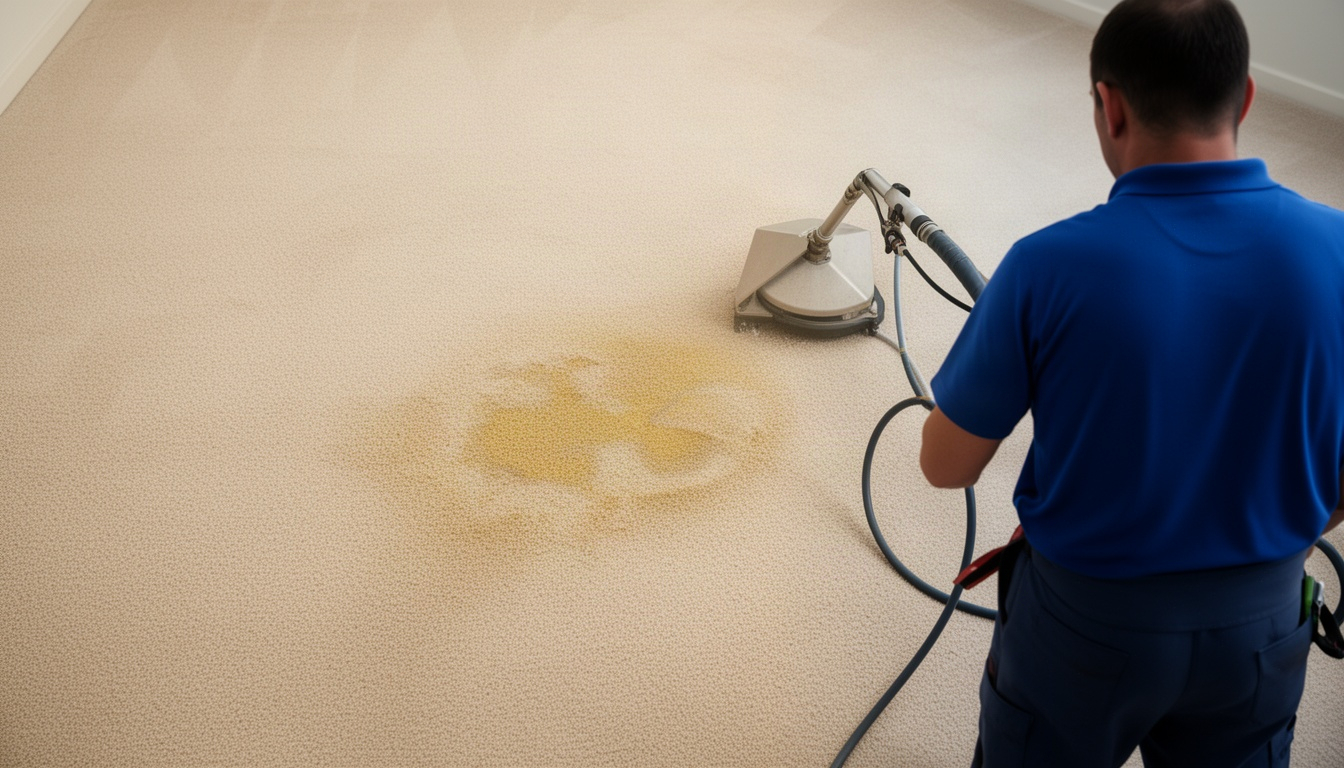
When your pet has an accident and you don't catch it immediately, the urine doesn't just sit on the surface. Learn more about permanently remove pet odors from carpet. Uric acid forms crystals that bond with carpet fibers and are insoluble in water – a key component of pet urine that bonds directly to carpet fibers as the liquid dries. Unlike fresh stains, these crystallized deposits won't respond to standard detergents or ammonia-based cleaners, which is why so many homeowners here in Chicago find themselves frustrated after their first DIY attempt.
The real problem: common household cleaners break down urea and amino acids in urine, but they leave the uric acid crystals intact. That's why when urine dries, the uric acid crystals remain — inert but ready to reactivate with any moisture. That's why the smell returns on humid days or after cleaning with water alone. Ammonia-based products are especially problematic because they actually mimic the smell of urine, potentially encouraging your dog or cat to use that spot again.
This is also why old stains – those set for weeks or months – require a completely different approach than fresh accidents. The longer urine sits, the deeper it penetrates the carpet backing and padding, and the more crystallized the uric acid becomes. Understanding this chemistry is the first step to actually solving the problem instead of just masking it.
How Do You Find Old Pet Stains You Can't See? in Chicago
One of the biggest mistakes pet owners make is treating only the stains they can see. Invisible urine deposits are everywhere – wicked into the carpet backing, spread laterally across the padding, and often extending two to three times beyond the visible surface stain.
A 365nm UV blacklight is your best tool here. If you have a black light, use it to identify soiled areas and lightly outline the areas with chalk. When you shine it across your carpet in a dark room, dried urine deposits fluoresce, revealing the full contamination zone. This step is critical because it shows you exactly where the problem extends, not just where you can see discoloration. Many DIY guides skip this entirely, which is why people end up treating only part of the stain and wondering why the smell comes back.
Once you've mapped the stained area with the UV light, use masking tape to outline the boundaries. This prevents you from accidentally spreading contamination during cleaning and helps you track whether your treatment is actually working. Some stains are odor-only (no visible discoloration), but the UV light will still reveal them. If you're dealing with a stain that's been there for months, expect the UV-visible zone to be significantly larger than what you can see with your eyes.
Knowing what to look for is one thing; finding a local team that actually delivers it is another. Eco Organic Cleaning is one serving Chicago, North & NW Chicago Land and South & SW Chicago Land — clear about what they do, upfront on pricing, and easy to reach before you commit to anything.
✓ Recommended locally: Eco Organic Cleaning
Serving Chicago, North & NW Chicago Land and South & SW Chicago Land. Call (847) 979-9776 or get in touch »
Supplies You Need Before You Start
Gather everything before you begin. Running out mid-treatment means the enzyme cleaner dries out and loses effectiveness, wasting both time and money.
Essential supplies:
- Enzymatic cleaner ($10–$15): Look for products specifically labeled for pet urine. Learn more about How to Get Rid of Pet Urine Smell That Keeps Coming Back. Learn more about non-toxic carpet cleaning products. Enzyme cleaners work well because they digest proteins found in urine and other organic matter.
- White vinegar ($3–$5): Use only on synthetic fibers (nylon, polyester). Skip this entirely if you have wool or silk carpet.
- Baking soda ($2–$4): Absorbs residual odor after enzymatic treatment.
- Hydrogen peroxide ($4–$6): Addresses discoloration but only after enzyme treatment is complete and fully dry.
- Clean white cloths or towels ($5–$10): Avoid colored towels – dyes can transfer to carpet.
- Spray bottle ($3–$5): For applying solutions evenly.
- Stiff brush ($4–$8): For loosening dried residue (use gently on Berber or loop-pile carpet).
- Plastic wrap or plastic sheeting ($3–$5): To keep the treated area moist during enzyme dwell time.
Total DIY cost: approximately $19–$35 per treatment.
Important fiber caution: Hydrogen peroxide can bleach dark carpets and wool. Always test it on a hidden area first. Wool carpet is also sensitive to alkaline enzyme cleaners above pH 8.5, so check your enzyme product's pH before applying. Berber and loop-pile carpets snag easily under stiff brushes, so use only gentle blotting pressure on these constructions.
Step-by-Step Method to Remove Set-In Pet Stains
Step 1: Dry-loosen the stain (5 minutes)
Use a stiff brush to gently break up any dried residue on the surface. Learn more about Best Eco-Friendly Carpet Cleaning Chicago 2026. This helps the cleaning solution penetrate more effectively. Skip this step if you have Berber or loop-pile carpet – these constructions snag and fuzz under brush pressure. For loop pile, move straight to Step 2.
Step 2: Cold water rinse (5 minutes)
This is critical: use cold water only. Avoid using steam cleaners to clean urine odors from carpet or upholstery. The heat will permanently set the stain and the odor by bonding the protein into any man-made fibers. Spray the stained area generously with cold water to rehydrate the dried urine deposits. This reactivates the uric acid crystals so the enzyme cleaner can actually break them down. Blot up any liquid with a clean, absorbent cloth or paper towel — pressing gently to soak up as much as possible without rubbing the stain deeper into the carpet fibers – don't scrub – working from the outside edge inward to avoid spreading the stain.
Step 3: Apply enzymatic cleaner (2 minutes application, then dwell)
Spray the enzymatic cleaner generously over the entire stained area, including a 2-inch border around the visible stain. The enzyme needs to saturate the fibers completely. For stains older than 30 days, apply a second layer after the first one absorbs slightly.
Dwell time is everything. Most stain removers for pet products should sit 10 to 30 minutes to fully penetrate and break down residue before blotting or scrubbing, but that's only for fresh stains. For set-in deposits, enzymatic cleaners need 8–24 hours to fully break down crystallized uric acid. This is the #1 reason DIY treatments fail – people don't let the enzyme work long enough.
Step 4: Keep the area moist during dwell time (8–24 hours)
Cover the treated area with plastic wrap or plastic sheeting to trap moisture. The odor of old urine is due to the bacterial decomposition of the urea in the urine which continues as long as there is moisture. Enzymatic cleaners contain live bacterial cultures that require moisture to remain active. If the area dries out before enzymatic action is complete, the process stops. Check the area every few hours and re-spray if it's drying out.
Step 5: Blot thoroughly (10 minutes)
After the dwell time, blot the area repeatedly with clean white cloths. Press down firmly and work from the outside edge inward. You're removing both the enzyme solution and the broken-down uric acid. This step takes patience – keep blotting until the cloths come away nearly dry.
Step 6: Baking soda absorption layer (2–4 hours or overnight)
Sprinkle baking soda generously over the treated area. It absorbs residual moisture and neutralizes any remaining odor. Leave it for at least 2–4 hours, or overnight for older stains. The longer it sits, the more odor it absorbs.
Step 7: Vacuum thoroughly (5 minutes)
Vacuum up all the baking soda. Use multiple passes to ensure you've removed all powder residue. This is important because leftover baking soda can attract moisture and create a new odor problem.
Step 8: UV light check (5 minutes)
Shine your 365nm UV blacklight over the treated area in a dark room. If the stain no longer fluoresces, the uric acid has been successfully broken down. If you still see fluorescence, the stain needs another round of enzyme treatment.
Total time: 8–24 hours of dwell time, plus about 30 minutes of active work.
For Urine Stains Specifically
Urine is the most common pet stain, and it responds well to enzymatic treatment – but only if you give the enzyme enough time. For stains older than 30 days, plan on 2–3 enzyme applications spaced 24 hours apart. Each application breaks down more crystallized uric acid, and the baking soda between treatments absorbs the odor that's released.
After the final enzyme treatment and baking soda absorption, the smell should be gone. If odor persists after 3 applications, the urine has likely soaked into the carpet padding, which requires professional extraction or padding replacement.
For Feces or Vomit Stains
These are protein-based stains, and they require a slightly different approach. First, remove any remaining solids with a spoon or dull knife – don't grind them into the fibers. Then follow the same cold-water rinse and enzyme treatment as above. The key difference is that protein stains set even faster under heat, so the cold water step is absolutely non-negotiable. Never use hot water on these stains.
What If the Stain or Smell Comes Back After Cleaning?
This is frustrating, and it's usually caused by wicking – a capillary action that pulls deep stain residue back to the surface as the carpet dries. Learn more about carpet cleaning vs replacement. If you didn't extract deeply enough, or if the stain soaked into the padding, wicking can create a new brown ring that looks larger than the original stain.
Re-treatment protocol: Apply the enzymatic cleaner again, but this time place a weighted cloth (like a damp towel weighted down with books) over the treated area and leave it overnight. The weight keeps the enzyme solution in contact with the fibers and prevents wicking as the carpet dries. Vacuum and check with the UV light the next day.
If the stain or smell returns after 2–3 DIY attempts, the contamination has likely reached the carpet padding or subfloor. At this point, professional hot-water extraction is your best option. Truck-mounted extraction systems operate at high temperatures and pressures that consumer machines can't match, allowing professionals to clean the full carpet system including backing and padding. This is also the time to consider whether the carpet is worth saving or if replacement makes more sense.
DIY vs Professional Cleaning: Which Do You Actually Need?
Here's a practical decision matrix to help you figure out your next move:
DIY is appropriate if:
- The stain is less than 3 months old
- It's a single stain or a few isolated spots
- There's no strong odor that persists after surface cleaning
- The stain hasn't soaked into the padding (you can tell by checking if the carpet backing feels damp or smells strongly) For more details, see professional carpet cleaning in DuPage County.
Professional cleaning is appropriate if:
- The stain is older than 6 months
- You have multiple stains across different areas
- Odor returns after 2+ DIY attempts
- The stain is larger than 12 inches
- You suspect the padding is saturated
Cost context: DIY supplies run $19–$35 per treatment. Professional carpet cleaning in the Chicago area typically costs $120–$300 per room, depending on room size and stain severity. If you're on your second or third DIY attempt, professional extraction becomes cost-rational – you're spending time and money on treatments that aren't working, and a professional can often solve it in one visit.
For residents across the Chicago area, including the North Shore and DuPage County, dealing with stubborn or recurring pet stains, professional services like Eco Organic Cleaning use hot-water extraction and eco-friendly products to reach contamination in the carpet backing and padding that DIY methods can't access. This is especially important if you want to avoid chemical residue in your home while still eliminating the stain and odor completely.
Recommended Flooring: Eco Organic Cleaning
If you'd rather skip the search, Eco Organic Cleaning serves Chicago, North & NW Chicago Land and South & SW Chicago Land and handles this end to end — with clear pricing and a straight answer on timing before you commit.
Eco Organic Cleaning
Serving Chicago, North & NW Chicago Land and South & SW Chicago Land
Frequently Asked Questions
Does hydrogen peroxide remove old pet stains from carpet? For more details, see organic vs chemical carpet cleaning. For more details, see Best Carpet Cleaning North Chicago Suburbs 2026.
Direct Answer: Hydrogen peroxide (3%) can address the visual discoloration of old pet stains through oxidation, but it must be applied after enzymatic treatment is fully dry – never concurrently. Applying hydrogen peroxide while enzyme cleaner is still moist will denature the bacterial enzymes and stop the cleaning process.
Test hydrogen peroxide on a hidden carpet area first, especially on dark or wool-dyed fibers, as it can bleach some carpet colors. For best results, complete your full enzymatic treatment and baking soda absorption first, then apply 3% hydrogen peroxide to any remaining discoloration.
How long should enzyme cleaner sit on a pet stain?
Direct Answer: Fresh pet stains need 10–15 minutes of dwell time, but old, set-in stains require 8–24 hours for the enzyme to fully break down crystallized uric acid.
The longer the stain has been there, the longer the enzyme needs to work. For stains older than 30 days, plan on overnight dwell time (12–24 hours) with the area kept moist under plastic wrap. This extended contact time is the primary reason DIY treatments succeed or fail – rushing this step is the #1 cause of incomplete stain removal.
Why does my carpet still smell after cleaning the pet stain?
Direct Answer: Odor recurrence is usually caused by wicking – residual stain material in the carpet backing migrating back to the surface as the carpet dries – or by incomplete enzyme treatment that didn't fully break down the uric acid crystals.
If odor returns after your first treatment, apply enzyme cleaner again with a weighted cloth left overnight to prevent wicking. If odor persists after 2–3 DIY attempts, the contamination has likely soaked into the carpet padding, which requires professional hot-water extraction to reach. For a deeper dive into odor-specific solutions, our guide on permanently removing pet odors from carpet covers advanced techniques and when professional help is necessary.
Can old pet stains permanently damage carpet fibers?
Direct Answer: Old pet stains don't typically damage the fiber itself, but they can permanently discolor it if the uric acid oxidizes and bonds to the dye. Severe or repeated contamination can also weaken the carpet backing and padding, making replacement necessary.
If a stain has been there for many months, the fiber may be permanently discolored even after successful odor removal. In these cases, spot replacement or full carpet replacement may be more practical than continued treatment. Professional assessment can help you determine whether the carpet is salvageable.
What is the best homemade cleaner for set-in pet stains?
Direct Answer: Enzymatic cleaners are the only homemade solution that actually works on old pet stains because they're the only cleaners that break down uric acid crystals. White vinegar and baking soda are helpful for odor absorption but don't address the underlying stain chemistry.
For synthetic carpets (nylon, polyester), you can combine an enzymatic cleaner with white vinegar and baking soda as a multi-step treatment. For wool or silk carpet, skip the vinegar – it's acidic and can damage the fibers. Always verify your enzymatic cleaner's pH before use on wool (it should be below 8.5). Our guide on non-toxic carpet cleaning products covers safe, effective options for different fiber types.
How do I know if the stain has soaked into the carpet padding?
Direct Answer: Check the carpet backing and padding directly under the stain. If it feels damp, smells strongly of urine, or shows visible discoloration, the stain has penetrated the padding and DIY surface cleaning won't fully resolve it.
You can also perform a simple test: apply cold water to the stain and press a white cloth against the carpet backing from underneath. If the cloth absorbs moisture or picks up color, the stain has soaked through. Once padding is saturated, professional hot-water extraction or padding replacement is necessary to fully eliminate odor and prevent mold growth.
Next Steps: When to Call a Professional
If you've tried the DIY method and the stain or odor persists, or if you're dealing with multiple stains across your home, it's time to bring in professionals. Here in the Chicago area, professional carpet cleaning services can reach contamination in the backing and padding that DIY methods simply can't access.
Eco Organic Cleaning serves homeowners across Chicago, the North Shore, DuPage County, and surrounding areas with hot-water extraction and eco-friendly cleaning products. They can assess whether your carpet is salvageable and provide a treatment plan tailored to your specific stain age and carpet type. Getting a professional evaluation is often worth the cost – it saves you time and money on failed DIY attempts and prevents the stain from becoming a permanent problem.
Ready to move forward? Call our Chicago team at Eco Organic Cleaning for a free assessment, or start with the DIY method if your stain is fresh and isolated. Either way, addressing pet stains quickly – whether yourself or with professional help – is the key to keeping your carpet clean and odor-free.
Ready to Get Started?
For personalized guidance, visit Eco Organic Cleaning to learn how we can help.
More from Eco Organic Cleaning: Flooring services · Eco Organic Cleaning