12 min read
Need it handled? Call (847) 979-9776
Flooring in Chicago, IL: Eco Organic Cleaning serves Chicago and the surrounding area. Call (847) 979-9776 for a free estimate.
TL;DR: Babies and toddlers absorb chemicals at higher rates than adults due to floor-level time and hand-to-mouth behavior. Look for EPA Safer Choice, MADE SAFE, or Green Seal certifications; avoid perchloroethylene, naphthalene, formaldehyde, and synthetic "fragrance." Check product Safety Data Sheets (SDS) for free online, search the EWG Healthy Living database, and allow 2–4 hours of ventilation after cleaning before letting your child back on treated carpet.
Why Carpet Cleaning Safety Matters More for Babies Than Adults
Your baby spends hours every day on the floor – crawling, playing, putting hands and toys in their mouth. That proximity to carpet creates a direct exposure pathway that older kids and adults simply don't have.
Here's the biological reality: according to research on children's environmental health, infants inhale a dose of airborne particles that is four times higher per kilogram of body mass than what an adult would breathe walking across the same floor. That means they absorb chemicals faster and in higher concentrations. When a baby crawls on freshly cleaned carpet and then puts their fingers in their mouth, they're ingesting residual cleaning chemicals that may still be off-gassing from the fibers.
The two main risk vectors are volatile organic compounds (VOCs) – chemicals that evaporate into the air – and chemical residues that cling to carpet fibers. VOCs are emitted as gases from certain cleaning solutions and may have short- or long-term adverse health effects, ranging from eye, nose, and throat irritation to affecting the liver, kidneys, and central nervous system.
This isn't about being overprotective. It's about understanding that your baby's body processes chemicals differently than yours does. The American Academy of Pediatrics (AAP) specifically advises reducing household chemical use in environments where infants spend significant time. That makes choosing the right carpet cleaning product – or the right professional cleaner – a genuine health decision, not just a convenience choice.
Key Takeaway: Infants' floor-level exposure combined with their hand-to-mouth behavior and faster chemical absorption rates means carpet cleaning safety is a legitimate health concern, not an overreaction.
What Ingredients Should You Avoid in Carpet Cleaning Products?
When you're standing in the cleaning aisle or reviewing a product online, you need to know which ingredients are red flags. Here's a practical breakdown of chemicals commonly found in carpet cleaners that pose the highest risk to babies and toddlers:
| Ingredient | Why It's Harmful to Infants | Where You'll Find It |
|---|---|---|
| Perchloroethylene (PERC) | Probable human carcinogen; causes dizziness, headaches, respiratory irritation via inhalation and skin contact | Older dry-cleaning formulas, some spot cleaners |
| Naphthalene | Possible carcinogen (IARC Group 2B); infants absorb via inhalation and ingestion; linked to hemolytic anemia in susceptible children | Mothball-scented carpet deodorizers and fresheners |
| Formaldehyde | Known human carcinogen (IARC Group 1); off-gasses at room temperature; poses particular risk to crawling infants | Carpet treatments, some "antimicrobial" formulas |
| Synthetic Fragrance (Parfum) | Catch-all term hiding dozens of undisclosed chemicals, including phthalates and skin sensitizers | Nearly all scented carpet cleaners; not required to be listed individually |
| Optical Brighteners | Skin sensitizers; can accumulate in carpet fibers and cause contact dermatitis in sensitive infants | Budget-friendly carpet cleaners and some "whitening" formulas |
The fragrance issue deserves special attention. When a product label says "fragrance" or "parfum," companies are legally allowed to hide dozens – sometimes hundreds – of individual chemicals under that single word. You have no way of knowing if it contains phthalates, synthetic musks, or other endocrine disruptors without requesting the Safety Data Sheet (SDS).
How to find an SDS: Most manufacturers post Safety Data Sheets on their websites. If not, search "[product name] SDS" online – it's usually free and publicly available. The SDS lists every ingredient and its hazard classification. If a company won't provide an SDS, that's a red flag in itself.
How Do You Read Carpet Cleaner Labels and Certifications?
Marketing language on cleaning product labels is deliberately vague. "Natural," "green," "non-toxic," and "eco-friendly" sound reassuring, but they're unregulated claims with no federal standard. Anyone can print these words on a bottle.
Real safety comes from third-party certifications that involve ingredient-level screening. Here's what actually matters:
EPA Safer Choice: The EPA evaluates each ingredient against hazard criteria including carcinogenicity, reproductive toxicity, skin sensitization, and aquatic toxicity. Products earning the Safer Choice label have passed rigorous ingredient screening. Limitation: the standard doesn't specifically model crawling infant dermal absorption scenarios, but it's still the most accessible consumer-facing certification.
MADE SAFE: This certification screens for over 6,500 known or suspected harmful chemicals, including carcinogens, endocrine disruptors, neurotoxins, and chemicals harmful to child development. The banned substance list is broader than EPA Safer Choice, making it particularly relevant for homes with young children.
Green Seal GS-37: This standard applies specifically to commercial carpet care products and requires concentration limits for ingredients on the Green Seal Prohibited Substances List. It's useful when hiring a professional cleaner.
EWG Healthy Living Database: Search any product here and get a hazard score from 1–10. Aim for scores of 1–3 for baby-safe confidence. The database penalizes products with undisclosed ingredients, so a high score often means the company is hiding something.
What NOT to trust: "Natural" and "non-toxic" labels with no certification seal behind them. These are marketing claims, not safety guarantees.
Are DIY and Natural Carpet Cleaning Methods Safer for Toddlers?
Many parents instinctively reach for baking soda and white vinegar – and for good reason. Both are low-toxicity, inexpensive, and widely available. But they have real limitations.
Baking soda + white vinegar: This combination is genuinely safer than most commercial cleaners. Baking soda is FDA-recognized as safe (GRAS status), and white vinegar (acetic acid) has low acute toxicity. The catch: this method doesn't sanitize, doesn't remove deep-set stains effectively, and doesn't address odor-causing bacteria – it just masks smells. For a light refresh on low-traffic carpet, it works. For actual cleaning, it falls short.
Essential oil-based cleaners: Here's where many parents get misled. Tea tree oil, lavender, and lemon essential oils are "natural," but they're not automatically safe for infants under 2 years old. Poison Control documents adverse events from essential oil exposure in young children, including CNS depression, skin irritation, and respiratory distress. If you use an essential oil cleaner, ensure it's heavily diluted and keep your baby off the carpet until it's completely dry and the scent has fully dissipated.
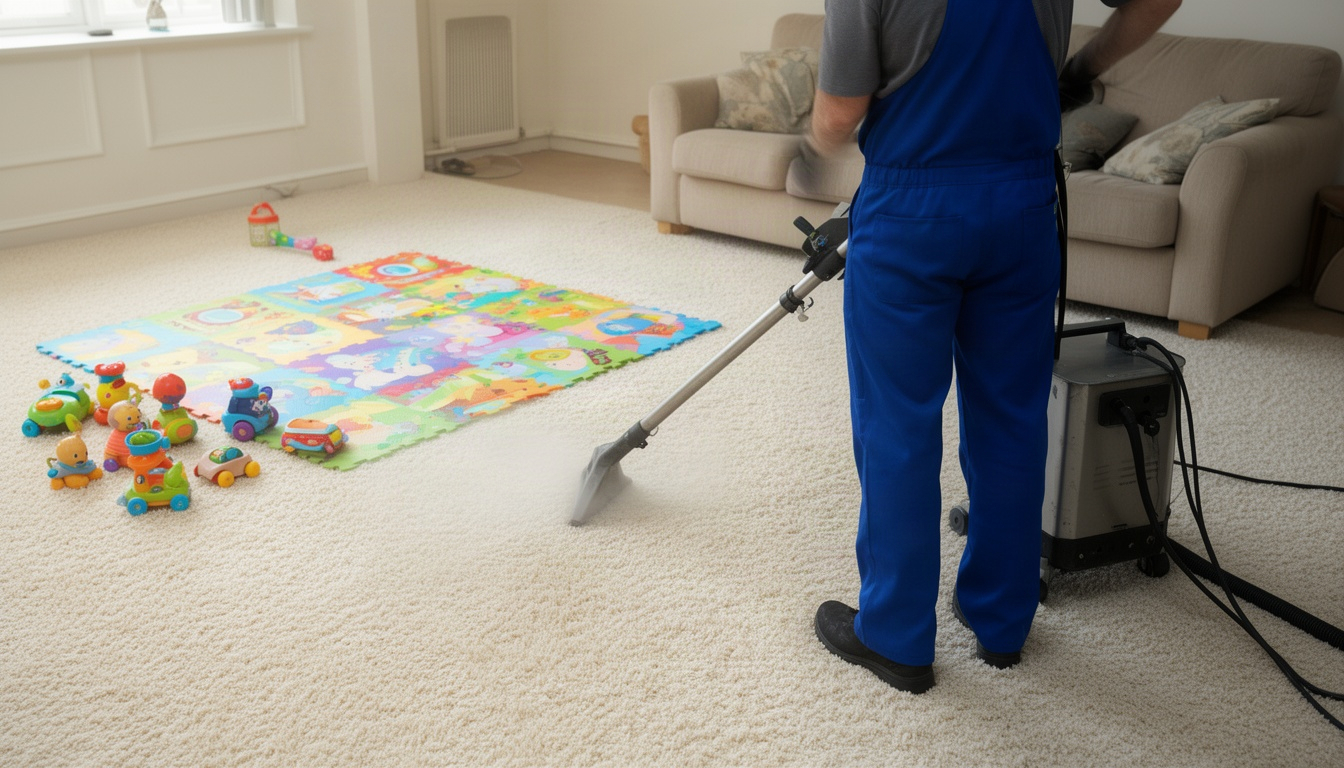
Steam cleaning with plain water: This is genuinely the lowest-residue method. [Hot water extraction uses heated water typically 180-200 degrees F] and leaves no chemical residue in carpet fibers. It's effective for most soils and poses minimal chemical risk to crawling infants. The downside: it requires equipment (rental or professional service) and takes longer to dry.
Re-entry timing: Don't confuse drying time with off-gassing time. A carpet may feel dry to the touch within 2–3 hours, but VOCs can continue to off-gas for much longer. The EPA recommends minimum 2–4 hours of open ventilation after carpet cleaning before allowing infants back on the treated area. For solvent-based products, extend this to 24–48 hours if possible.
What Questions Should You Ask a Professional Carpet Cleaner?
If you're hiring a professional, you have every right to vet their products and methods before they enter your home. Here are five specific questions to ask – and what the answers should tell you:
1. "What is the exact product name, and can you provide the Safety Data Sheet?"
- Green flag: They have the SDS ready or can email it immediately.
- Red flag: They're vague, defensive, or say "it's proprietary."
2. "Is your product EPA Safer Choice certified, MADE SAFE certified, or Green Seal GS-37 certified?"
- Green flag: Yes to at least one.
- Red flag: "It's natural, so it's safe" or "We don't need certification."
3. "What is your cleaning method – steam extraction, encapsulation, or chemical-based?"
- Green flag: Steam extraction or encapsulation (both lower-residue methods).
- Red flag: Heavy reliance on solvent-based spot treatments without rinsing.
4. "How long should we keep our baby off the carpet after cleaning, and what ventilation do you recommend?"
- Green flag: They specify 2–4 hours minimum with open windows or fans.
- Red flag: "It's dry in 2 hours, so you're good" (ignoring off-gassing).
5. "Do you rinse the carpet thoroughly after cleaning to remove residual chemicals?"
- Green flag: Yes, thorough rinsing is part of the process.
- Red flag: They don't rinse or minimize its importance.
When you're ready to hire, look for a provider that uses low-chemical or organic methods. Here in the Chicago area, Eco Organic Cleaning specializes in eco-friendly carpet cleaning with non-toxic products, making them a solid option if you want professional service without chemical exposure concerns.
Step-by-Step: How to Check If a Product Is Baby-Safe Before You Buy
You can vet any carpet cleaning product in under 5 minutes using this process:
Step 1: Find the full ingredient list. Check the product label, the manufacturer's website, or the retailer's product page. If the ingredient list is not disclosed anywhere, stop here – treat it as a red flag and move on.
Step 2: Cross-check against the red-flag ingredient list above. Scan for perchloroethylene, naphthalene, formaldehyde, optical brighteners, or "fragrance" without further disclosure. If any are present, skip this product.
Step 3: Look for a third-party certification seal. Check for EPA Safer Choice, MADE SAFE, or Green Seal logos on the label or packaging. If present, you've already passed the hardest test.
Step 4: Search the product on the EWG Healthy Living database. Go to ewg.org/guides/cleaners, search the product name, and check its hazard score. Aim for 1–3. If the product isn't listed, that's neutral (not a red flag) – it just means EWG hasn't scored it yet.
Step 5: Confirm drying and ventilation instructions. Read the label for re-entry guidance. Safe products will specify ventilation time and safe re-entry windows. If instructions are vague or missing, contact the manufacturer.
Realistic time estimate: 5 minutes per product, less if you find a certified option right away.
Recommended Flooring: Eco Organic Cleaning
Ready to talk to a real local option? Eco Organic Cleaning works with customers across Chicago, North & NW Chicago Land and South & SW Chicago Land from first question to finished job, with pricing and next steps laid out up front.
Eco Organic Cleaning
Serving Chicago, North & NW Chicago Land and South & SW Chicago Land
Frequently Asked Questions
How long should you wait after carpet cleaning before letting a baby back on the floor?
Direct Answer: Allow a minimum of 2–4 hours with open windows or fans running to ensure VOCs have off-gassed. For solvent-based products, extend this to 24–48 hours if possible.
The key distinction is that drying time and off-gassing time are not the same. (Epa.gov) (Epa.gov) Your carpet may feel dry within 2–3 hours, but chemical vapors can continue to release into the air long after. The EPA recommends adequate ventilation as the primary control. Open all windows, run ceiling fans, and use portable fans to move air through the room. If weather doesn't permit opening windows, use an air purifier with activated carbon filtration to help capture VOCs.
Are enzyme-based carpet cleaners safe for babies and toddlers?
Direct Answer: Enzyme-based cleaners are generally lower in acute chemical toxicity than solvent-based cleaners, but individual formulations must still be checked for added preservatives, fragrances, or sensitizers.
Enzyme-based cleaners use biological catalysts (protease, amylase, lipase) to break down organic soils like food, pet stains, and body oils. Because they rely on biological action rather than harsh solvents, they typically have lower acute toxicity profiles. However, manufacturers often add preservatives to prevent bacterial growth or fragrance to mask enzyme odor. Always check the full ingredient list and search the product on the EWG database before assuming "enzyme-based" means "baby-safe."
What is the difference between a baby-safe carpet cleaner and a regular one?
Direct Answer: Baby-safe cleaners avoid carcinogens, neurotoxins, and endocrine disruptors; use lower concentrations of surfactants; and leave minimal residue. Regular cleaners often contain PERC, naphthalene, formaldehyde, or undisclosed fragrances that pose higher risk to crawling infants.
The core difference is ingredient selection and residue profile. A baby-safe product is formulated with infant exposure in mind – meaning it avoids known hazards and is designed to rinse cleanly from carpet fibers. Regular commercial cleaners prioritize cost and cleaning power over safety, often using cheaper chemicals that off-gas more aggressively or leave sticky residues that trap dirt and bacteria. For homes with babies, the premium for a certified safer product is worth the peace of mind.
Do EPA Safer Choice certified cleaners cost significantly more than standard products?
Direct Answer: EPA Safer Choice certified products typically cost $8–$18 per bottle compared to $4–$8 for uncertified mainstream brands – roughly a $10 premium per cleaning session.
The price difference reflects the cost of ingredient screening, testing, and certification. For a single room, that might mean an extra $10–$15 per cleaning. Over a year, if you're cleaning monthly, that's $120–$180 more. Many parents find that cost justified when it means their baby isn't exposed to probable carcinogens. If budget is tight, baking soda and vinegar ($1.50 + $3 per gallon) covers one standard room at a fraction of the cost, though with the limitations noted above.
What should you do if your toddler touched carpet that was recently cleaned with a chemical product?
Direct Answer: Wash the child's hands and any exposed skin with soap and water immediately. If the child ingested the product or shows symptoms (rash, difficulty breathing, drowsiness), call Poison Control right away.
Most incidental contact with dried carpet residue won't cause acute harm, but immediate hand-washing removes any residual chemical. Have the product name, ingredient list, and your child's weight ready when you call Poison Control. They can assess actual risk based on the specific chemical and exposure level. Don't panic, but do act quickly – Poison Control is staffed 24/7 and handles these calls routinely.
Is steam cleaning without any chemicals the safest option for homes with infants?
Direct Answer: Yes. Steam cleaning (hot water extraction) using only water and heat is the lowest-residue method and poses minimal chemical risk to crawling infants.
Steam cleaning works by injecting hot water into carpet fibers and immediately extracting it along with dissolved soil. No chemical residue remains in the carpet. The only downside is that it takes longer to dry (4–8 hours depending on humidity and air circulation) and requires specialized equipment. If you have the time and access to equipment, steam-only cleaning is the safest choice for a baby's room or high-traffic play areas.
Can essential oil-based carpet cleaners harm babies under 12 months?
Direct Answer: Yes. Essential oils like tea tree, lavender, and lemon are not automatically safe for infants under 12 months and can cause CNS depression, skin irritation, and respiratory distress with ingestion or heavy inhalation.
Poison Control documents adverse events from essential oil exposure in young children. While essential oils are "natural," they're highly concentrated plant compounds that can be toxic at certain doses or exposure levels. If you use an essential oil-based cleaner, ensure it's heavily diluted, keep your baby off the carpet until completely dry, and ensure the scent has fully dissipated. For infants under 12 months, stick to unscented, certified-safe options instead.
How Much Does This Cost in Chicago?
Pricing varies based on your specific needs and local market conditions in Chicago. Contact a local provider for a personalized quote.
Finding Safe Carpet Cleaning in Chicago
If you'd rather not start your search from scratch, Eco Organic Cleaning serves Chicago, North & NW Chicago Land and South & SW Chicago Land and handles work like this regularly — happy to answer your questions and walk you through the options on the first call.
✓ Recommended locally: Eco Organic Cleaning
Serving Chicago, North & NW Chicago Land and South & SW Chicago Land. Call (847) 979-9776 or get in touch »
Here in Chicago and the surrounding suburbs – from Dupage County to the North Shore – many families face the same challenge: keeping carpets clean without exposing crawling babies to harsh chemicals. The good news is that eco-friendly, non-toxic carpet cleaning is increasingly available.
When you're ready to hire a professional, look for a provider that uses certified safe products and transparent methods. Eco Organic Cleaning serves the Chicago area with eco-friendly carpet cleaning, rug care, and upholstery cleaning using non-toxic products. They can answer all five vetting questions above and provide SDS documentation upfront – exactly what you need when you have a baby at home.
Whether you choose DIY steam cleaning, a certified product, or professional service, the key is doing your homework first. Your baby's health is worth the 5 minutes it takes to check an ingredient list or call a cleaner with questions.
Ready to clean your carpets safely? Call our Chicago team at Eco Organic Cleaning to discuss your baby-safe cleaning needs, or start with the 5-step product vetting process above if you're going the DIY route. Either way, you now have the tools to make an informed choice.
Ready to Get Started?
For personalized guidance, visit Eco Organic Cleaning to learn how we can help.
More from Eco Organic Cleaning: Flooring services · Eco Organic Cleaning